

Best Greek Islands to Avoid Crowds: 7 Alternatives Worth the Detour
Santorini and Mykonos are genuinely beautiful. They’re also genuinely overwhelming in July and August — cruise ships unloading thousands of passengers before lunch, sunset spots filling up an hour in advance, restaurants where the queue starts at 7pm. If that’s what you’re trying to avoid, you’re not alone, and you have a lot of good options.
The best Greek islands to avoid crowds aren’t hidden secrets so much as places that require slightly more effort to reach, or that lack the specific combination of Instagram scenery and direct flight connections that funnel millions of visitors to the same ten spots every summer. The trade-off is almost always worth it.
Here are seven of the best Greek islands to avoid crowds, with honest takes on what each one actually offers.
Why Some Greek Islands Stay Quieter Than Others
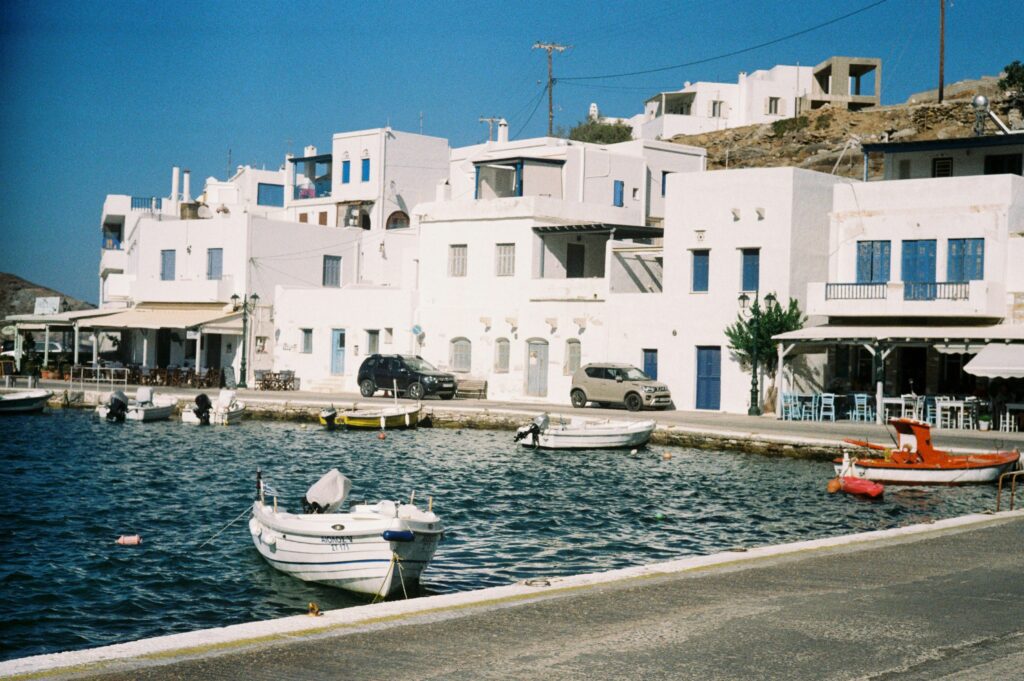
A few patterns explain why certain islands stay manageable while others get overwhelmed:
- No direct flights — islands without airports naturally filter out casual visitors, since the ferry-only commitment requires more planning
- Off the main ferry route — the Piraeus–Santorini–Mykonos corridor carries the bulk of Cyclades tourists; islands that sit off this route see a fraction of the traffic
- Less social media penetration — some islands simply haven’t become iconic photo backdrops, which keeps them off the algorithmic radar
- Small accommodation supply — islands with limited hotel beds can only absorb so many visitors, which acts as a natural cap
None of this means these islands are worse. It usually means they’re better.
1. Paros — Best Cycladic Alternative to Santorini and Mykonos
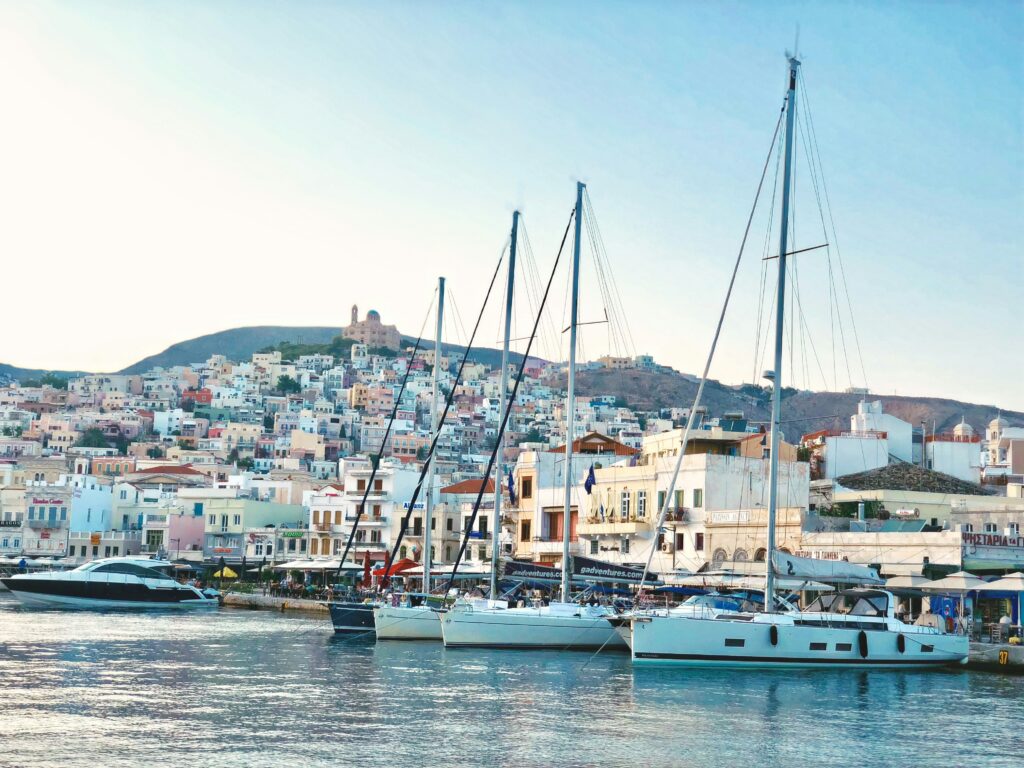
Paros is the most accessible entry point on this list — close to Santorini and Mykonos on the ferry map, with a proper airport and direct European connections, but with a noticeably different atmosphere. It was named the best island in the world by Travel + Leisure in 2025, and while it’s not undiscovered, it hasn’t tipped into the overwhelmed category that its neighbors have.
The harbor town of Naoussa is the main draw: a working fishing village that’s also become home to good restaurants, wine bars, and a social scene that feels genuinely Greek rather than purely tourist-facing. The old town of Parikia has more history and a slower pace. Beaches are good — Golden Beach on the southeast coast is particularly well-suited to swimming and windsurfing.
If you want the Cyclades aesthetic — whitewashed architecture, blue water, good food and wine — but want to actually enjoy it rather than queue for it, Paros is the answer.
Paros is also one of our top picks in the best Greek islands for couples guide.
Search accommodation in Paros on Booking.com
2. Milos — Best Greek Island to Avoid Crowds for Beach Lovers
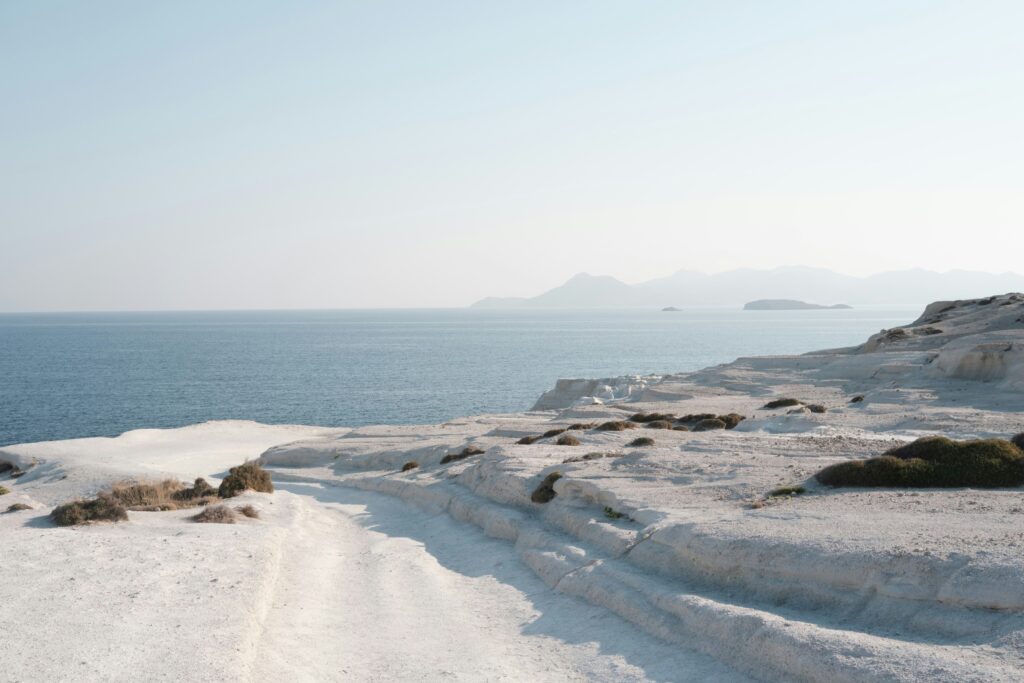
Milos has the kind of beaches that make people question why they ever went to Santorini. Sarakiniko — white volcanic rock formations with turquoise water — looks like a moonscape. Kleftiko is a series of sea caves accessible only by boat, with water in shades of blue that photographers spend entire trips trying to capture accurately. There are over 70 beaches on a relatively small island, and many of them feel genuinely quiet even in peak season.
The island sits in the southwest Cyclades, which is slightly out of the way compared to the main Santorini-Mykonos ferry corridor. That geographical inconvenience is the main thing keeping it calmer. It has direct flights from Athens and a few European cities, but nothing like the volume of connections that Santorini gets.
The village of Plaka on the hilltop is lovely for an evening — small, atmospheric, with good restaurants and views across the Aegean. The fishing village of Klima, where brightly painted boat houses sit directly at the waterline, is one of the more photographed spots in the Cyclades and still feels unhurried.
Search accommodation in Milos on Booking.com
A boat tour around Milos — visiting Kleftiko and the sea caves — is the best way to experience the island’s coastline. Book via Klook for options and availability.
3. Folegandros — Best Greek Island for Crowds-Haters Who Want Drama
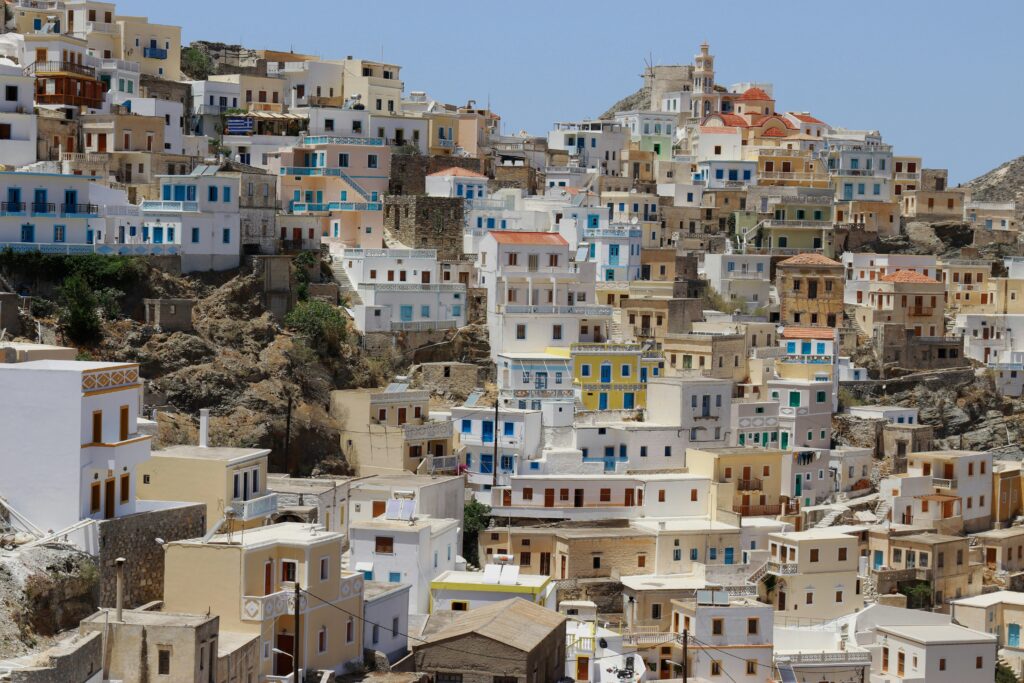
Folegandros is just over an hour from Santorini by fast ferry, but feels like a different Greece entirely. It has the cliffside drama of Santorini — Chora, the main town, sits on a promontory above the sea with whitewashed houses and narrow lanes — without any of the cruise ship tourism or luxury hotel saturation.
The island is deliberately low-key. There’s no airport, which means everyone arriving committed to the ferry journey. Accommodation is mostly boutique hotels and small guesthouses. The beaches require hiking to reach, which further filters the casual visitor. What’s left is an island that feels genuinely peaceful and surprisingly sophisticated — the restaurants in Chora’s interlocking squares are better than you’d expect for an island this size.
It’s not an island for people who want amenities and convenience. It’s an island for people who want to actually slow down.
Search accommodation in Folegandros on Booking.com
4. Syros — Best Quiet Greek Island With Year-Round Life
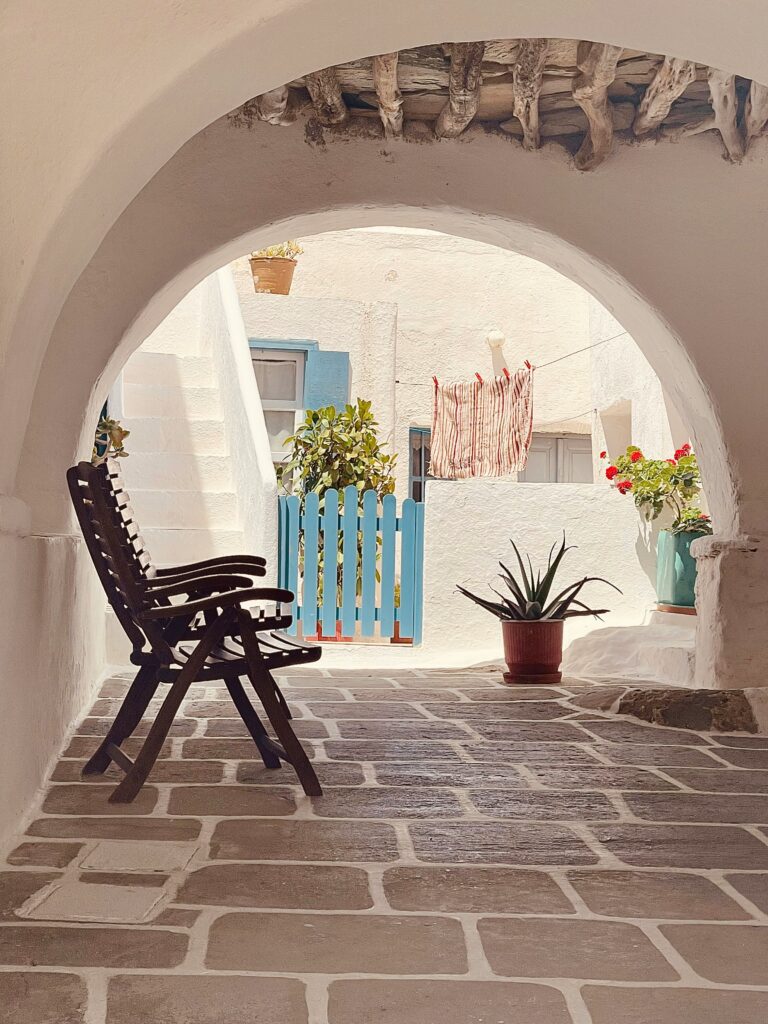
Syros is the administrative capital of the Cyclades, which means it has a year-round population and a functioning city life that most Greek islands lose entirely in winter. That alone makes it different — tavernas are full of locals, not just tourists, and the island has an opera house modelled after La Scala that actually runs performances.
The capital, Ermoupoli, has elegant neoclassical architecture and marble-paved squares that are genuinely beautiful and almost always quiet by Greek island standards. It’s an island where Greeks go to relax, which tends to be a reliable signal that a place hasn’t been ruined by tourism.
Beaches on the west coast — Galissas, Kini, Delfini — are calm, sandy, and rarely overcrowded. Syros is a short ferry ride from Mykonos if you want to combine both, and sits on the main Cyclades ferry route, making it easy to reach.
Search accommodation in Syros on Booking.com
5. Naxos — Best Gateway Island That Stays Manageable
Naxos isn’t undiscovered — it shows up on plenty of lists and gets a reasonable volume of tourists. But it’s large enough that the crowds distribute across the island rather than concentrating in one spot, and it hasn’t developed the luxury hotel saturation that makes Santorini feel exclusive and overwhelming at the same time.
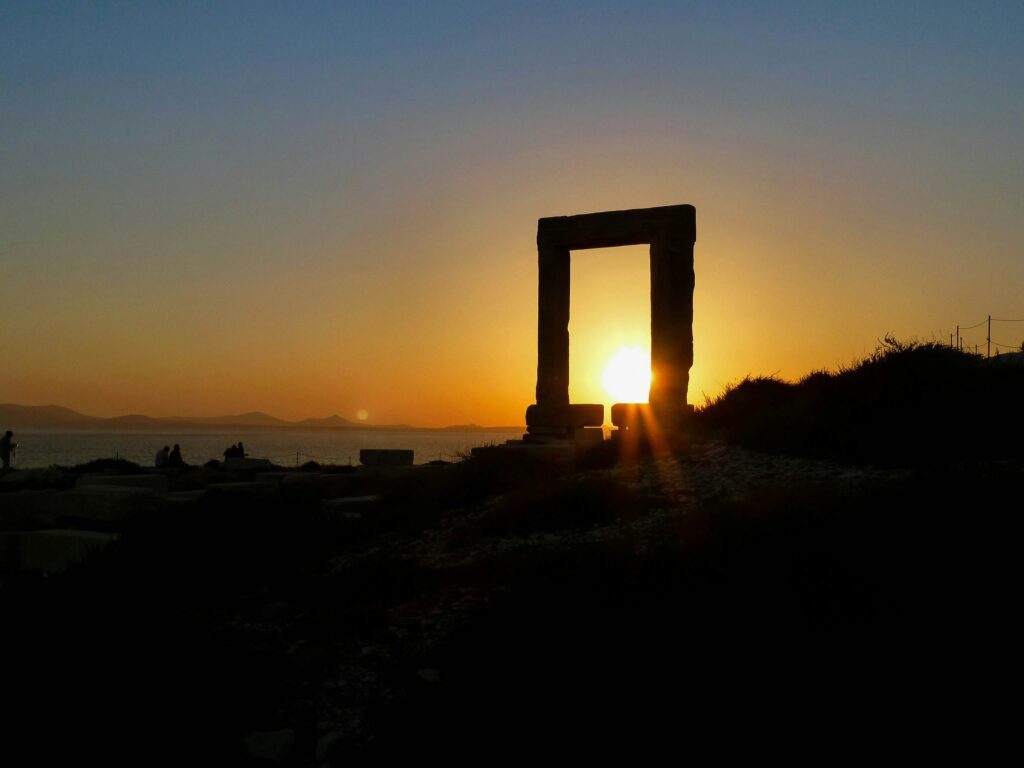
The beaches are the main argument for Naxos: long, sandy, shallow, and genuinely excellent. Agios Prokopios and Agia Anna consistently rank among the best in the Cyclades. The Portara — an ancient marble doorway on a promontory above the harbor — is one of the most atmospheric sunset spots in Greece and still doesn’t require queuing for it.
The island also produces better food than most of its neighbors — local cheese, potatoes, citrus — which makes eating well easier and cheaper. And it sits on the main Cyclades ferry route, making it straightforward to use as a hub if you want to see more of the islands.
Naxos features heavily in our best Greek islands for families guide too — the calm beaches make it a natural fit for both.
Search accommodation in Naxos on Booking.com
6. Lefkada — Best Ionian Island to Avoid Crowds
Lefkada is connected to mainland Greece by a floating bridge, which means you can drive there without a ferry. That logistical quirk keeps it off the cruise ship circuit and away from the casual day-tripper traffic that floods the more accessible Ionian islands in summer.
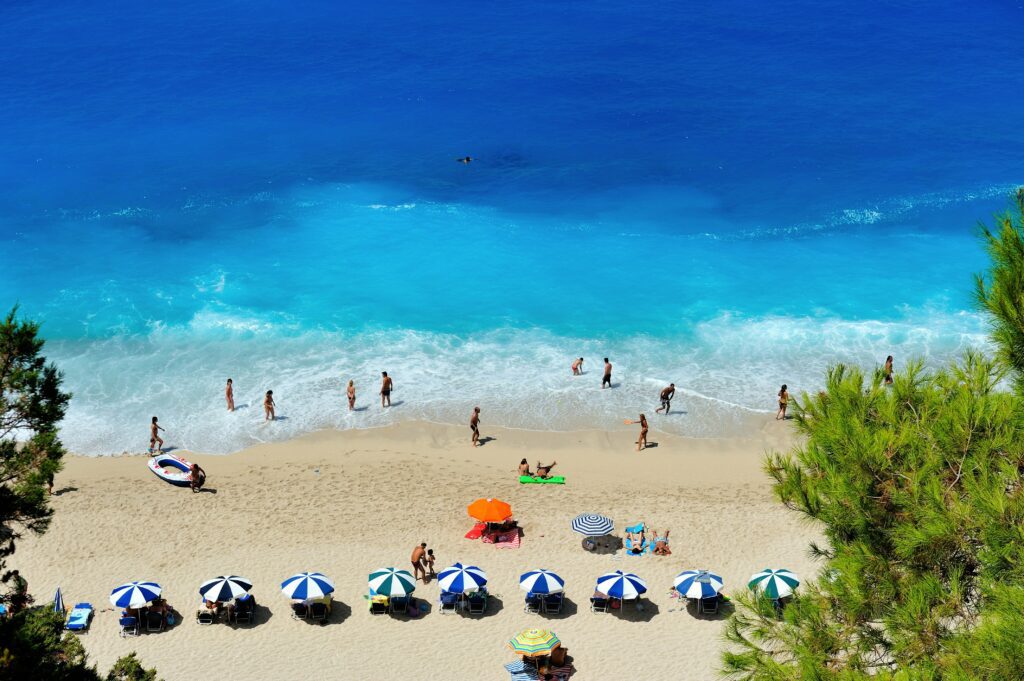
The west coast beaches are among the finest in Greece. Porto Katsiki — reached by boat or a steep descent on foot — is genuinely dramatic, with white cliffs dropping into turquoise water. Egremni is similarly spectacular. Both beaches are far enough off the main drag to feel private even in peak season.
The village of Nikiana on the east coast is one of the quietest and most genuinely local bases on the island — a small fishing village with waterfront tavernas and the kind of unhurried pace that’s hard to manufacture. Our guide to where to stay near Nikiana covers the best accommodation options in the area.
Getting around Lefkada requires a car — the west coast beaches aren’t reachable without one. QEEQ and AutoEurope both have good availability at Preveza airport, the nearest arrival point.
Search accommodation in Lefkada on Booking.com
7. Karpathos — Best Greek Island for Travelers Who Really Want to Get Away
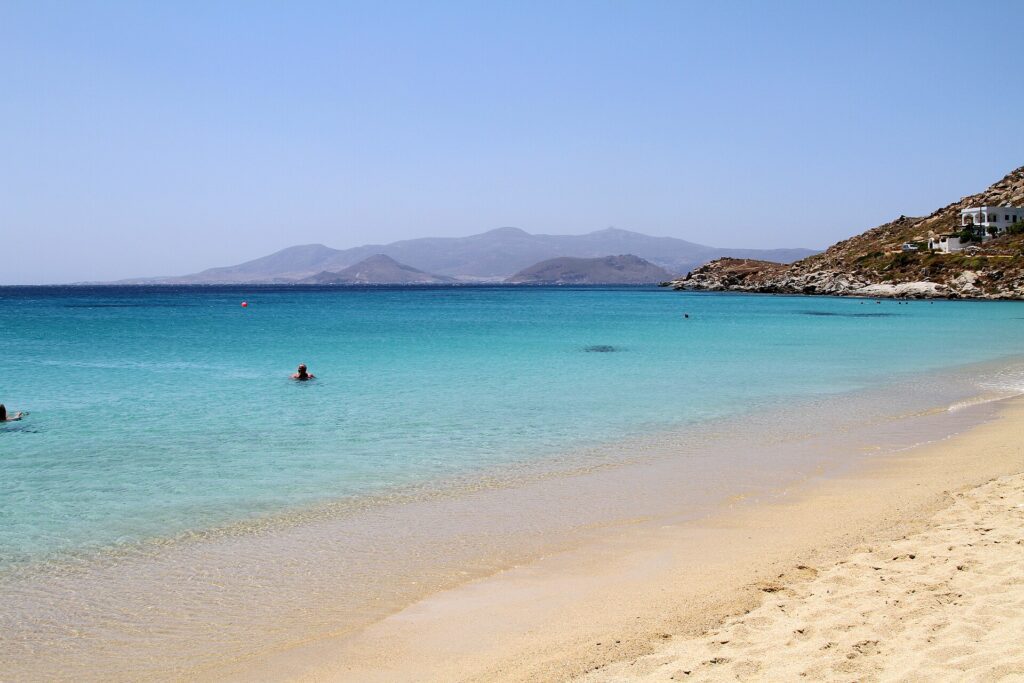
Karpathos sits in the Dodecanese, between Rhodes and Crete, and is the kind of island where the northern village of Olympos has preserved traditional customs, dress, and architecture that have largely disappeared elsewhere in Greece. Women in traditional dress still bake bread in communal ovens. The pace is genuinely different from anything you’ll find in the Cyclades.
The island has two distinct halves — the developed south around the capital Pigadia, with sandy beaches and a reasonable tourism infrastructure, and the wild, mountainous north that’s accessible mainly by boat or very rough road. That division keeps the island interesting for longer stays.
Karpathos takes effort to reach — it has an airport with seasonal connections, but it’s not on any main ferry circuit. That effort is what keeps it quiet. For a more detailed look at whether it’s the right fit, our post on whether Karpathos is worth visiting covers what to expect.
Search accommodation in Karpathos on Booking.com
Practical Tips for Avoiding Crowds in Greece
- Go in shoulder season: May, June, and September cut crowd levels significantly on every island. Our best time to visit the Greek islands guide breaks this down by month
- Avoid the main ferry corridor: The Piraeus–Paros–Naxos–Santorini–Mykonos route carries the majority of Cyclades tourists. Islands that sit off this route — Milos, Folegandros, Syros, Karpathos — naturally see less traffic
- Skip islands with cruise ship ports: Santorini, Mykonos, Corfu, and Rhodes all receive regular cruise ship calls that flood the streets for six to eight hours. Islands without cruise port infrastructure stay calmer by default
- Fly into Athens and ferry from Piraeus: Kiwi.com is useful for finding affordable connections to Athens, from where you can reach most islands by overnight ferry — which saves a hotel night and lets you arrive fresh
- Stay connected between islands: An eSIM from Airalo keeps you online across all destinations without worrying about local SIMs
- Plan transfers in advance: On quieter islands, taxis and transfers are limited. GetTransfer lets you book private transfers from airports and ports in advance, which avoids the scramble on arrival
For a full comparison of all the Greek islands and what each group offers, our guide to the best Greek islands is a good starting point before you decide where to go.