

Best Greek Islands to Visit: A Guide for Every Type of Traveler
With over 200 inhabited islands, Greece has a well-deserved reputation for being impossible to plan. Every island promises whitewashed villages, turquoise water, and great food — so how do you actually choose?
The honest answer is that the best Greek island for you depends entirely on what you’re after. The right pick for a couple on a honeymoon looks nothing like the right pick for a family with kids, a solo traveler on a budget, or someone who wants beaches over everything else. This guide cuts through the noise and matches islands to traveler types, so you can stop second-guessing and start booking.
A few practical notes before diving in: the Greek islands are split into several distinct groups — the Cyclades (Santorini, Mykonos, Paros), the Ionian Islands (Corfu, Kefalonia, Zakynthos), the Dodecanese (Rhodes, Kos, Karpathos), the Sporades (Skiathos), and Crete, which stands alone as the largest island in Greece. These groups are geographically spread out, and there are no direct ferries between most of them. Plan your trip around one island group to save time and avoid expensive inter-island flights.
Best Greek Island for First-Timers: Crete or Corfu
If it’s your first time in Greece and you want the full experience without the logistical headaches, Crete and Corfu are the two most reliable starting points.
Crete is the largest Greek island and functions almost like a country within a country. It has two international airports, incredible diversity — mountain villages, Minoan ruins, long sandy beaches, and some of the best food in Greece — and enough to fill two weeks without running out of things to do. The Palace of Knossos near Heraklion is one of the most significant archaeological sites in Europe. The beaches at Elafonissi and Balos in the west are genuinely stunning. And because it’s so large, even in peak season you can find quieter pockets away from the crowds.
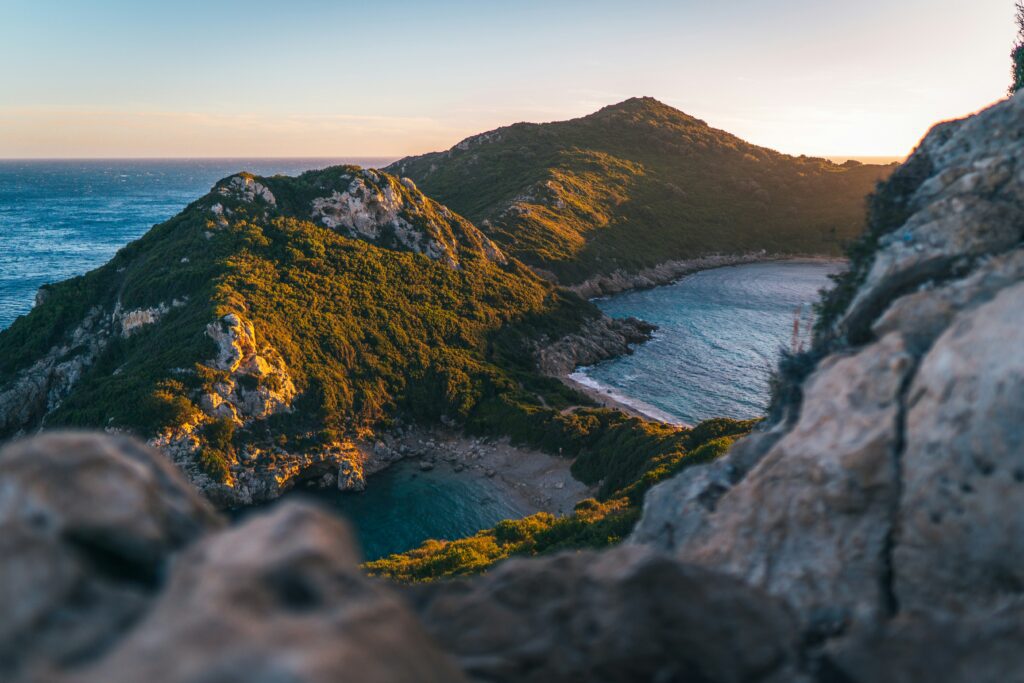
Corfu is the other strong first-timer pick, especially if you want a smaller-scale, more manageable destination. It has a UNESCO-listed old town that’s one of the most beautiful in Greece, excellent infrastructure, and enough variety — beaches, villages, history, good food — to keep most travelers happy for a week. It also has some of the lushest scenery in the Greek islands, a result of significantly more rainfall than the drier Cyclades.
For more detail on where to base yourself in Corfu, see our full guide to where to stay in Corfu.
Best Greek Island for Couples: Santorini or Corfu
Santorini is the obvious answer, and for good reason — the caldera views from Oia and Imerovigli are genuinely extraordinary, and the island has a level of luxury infrastructure (boutique hotels with private infinity pools, excellent wine, good restaurants) that few other Greek islands can match. If the budget allows and you’re willing to deal with the crowds, it delivers on the romantic promise.
That said, Santorini in July and August can feel more like a cruise ship port than a romantic escape. The caldera path gets congested, sunset spots fill up an hour in advance, and prices for caldera-view hotels are eye-watering. If you want Santorini without the intensity, go in May, early June, or September.
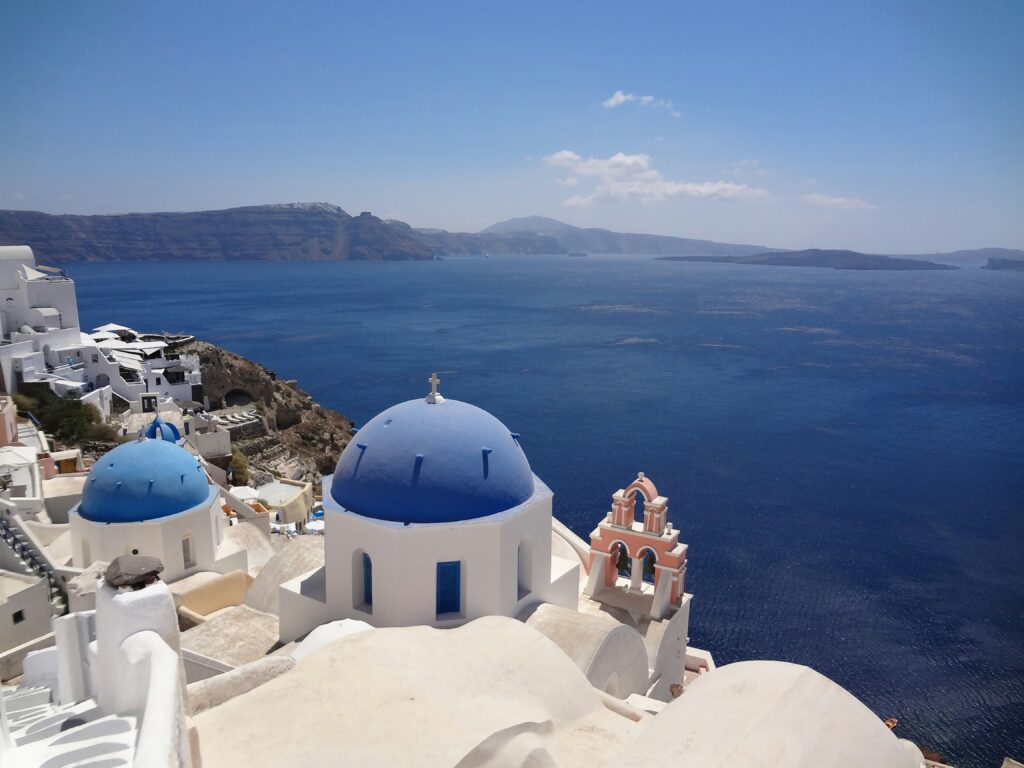
Corfu’s northeast coast is an underrated alternative — quieter, greener, and genuinely romantic without the price tag. The stretch from Dassia up to Kassiopi and Agni Bay has a relaxed, unhurried quality that’s increasingly hard to find in Greek island tourism.
Best Greek Island for Beaches: Milos or Zakynthos
If beaches are the primary reason you’re going, Milos is the answer most people don’t expect. It has over 70 beaches, and the variety is remarkable — the moon-like white volcanic rock formations at Sarakiniko, the sea caves at Kleftiko (accessible only by boat), and quiet coves that still feel genuinely off the beaten path. The island hasn’t been overrun to the degree that Santorini and Mykonos have, though that’s slowly changing.
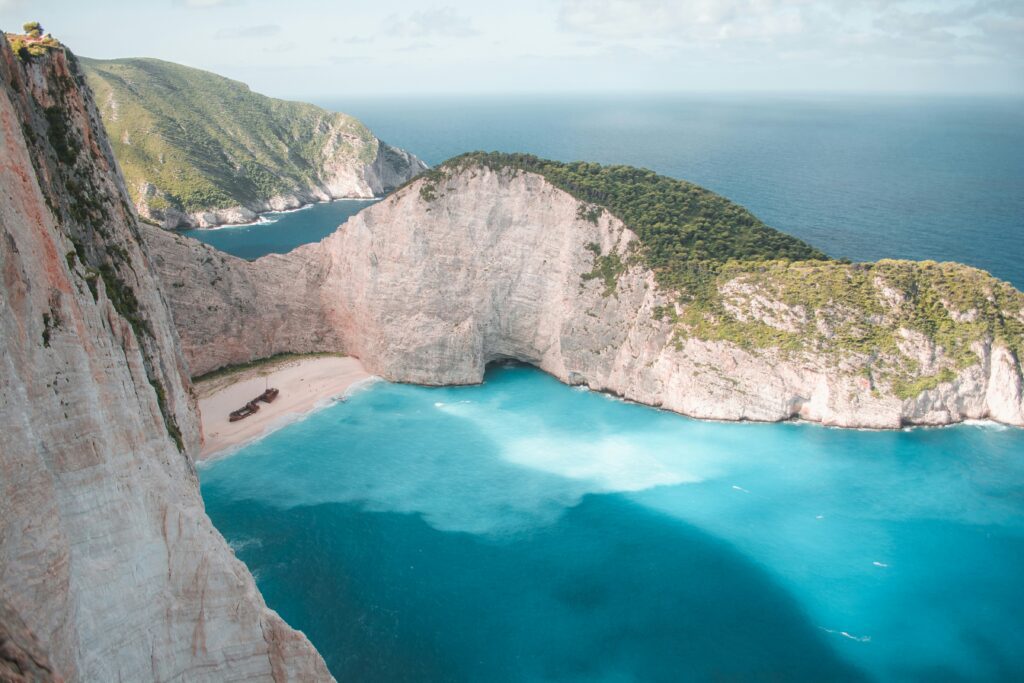
Zakynthos (Zante) is another strong beach option. Navagio Beach — the famous shipwreck cove accessible only by boat — is one of the most photographed spots in the Mediterranean, and the Blue Caves on the north coast are worth a boat trip. The south and east coasts have long sandy beaches that are better suited to families and less dramatic than Navagio.
Skiathos in the Sporades is worth mentioning too — it has some of the finest sandy beaches in Greece, including the famous Koukounaries. It’s a smaller island, which means you can cover a lot of ground in a short trip. See our Skiathos guide for a breakdown of the best spots.
Best Greek Island for Families: Naxos or Kos
Naxos is consistently the best Greek island for families and doesn’t get enough credit for it. It has long, shallow sandy beaches — Agios Prokopios and Agia Anna are both excellent for kids — plus a beautiful fortified old town (the Kastro), a Portara (ancient marble doorway) at sunset that beats Santorini for atmosphere with a fraction of the crowds, and food that’s better than almost anywhere else in the Cyclades. It’s also notably cheaper than Mykonos or Santorini. The fact that it’s less Instagrammed than its neighbors works in your favor.
Kos is the more resort-style family option in the Dodecanese — flat enough to explore by bicycle, with good beaches, water parks, and a well-developed tourism infrastructure. It’s not the most atmospheric island in Greece, but it’s practical and easy for families with young kids.
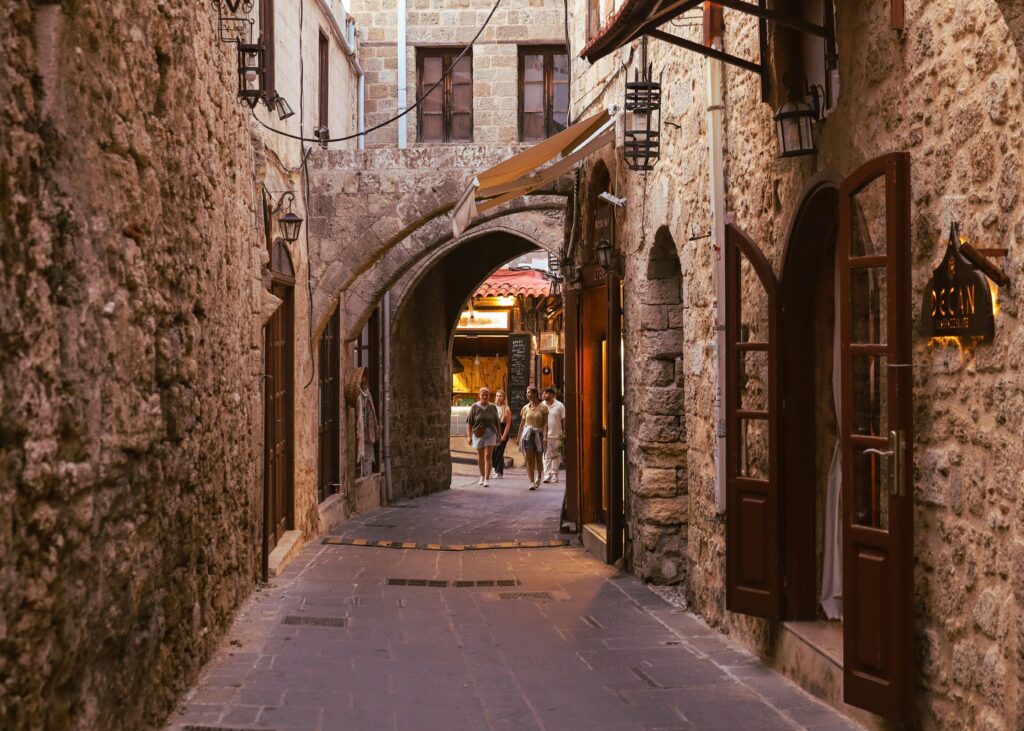
Rhodes is worth considering too, particularly if you want to combine beach time with history — the medieval Old Town is a UNESCO World Heritage Site and one of the best-preserved in the Mediterranean. Our guide to Rhodes Old Town covers what to see and how to make the most of it.
Best Greek Island for Nightlife: Mykonos or Ios
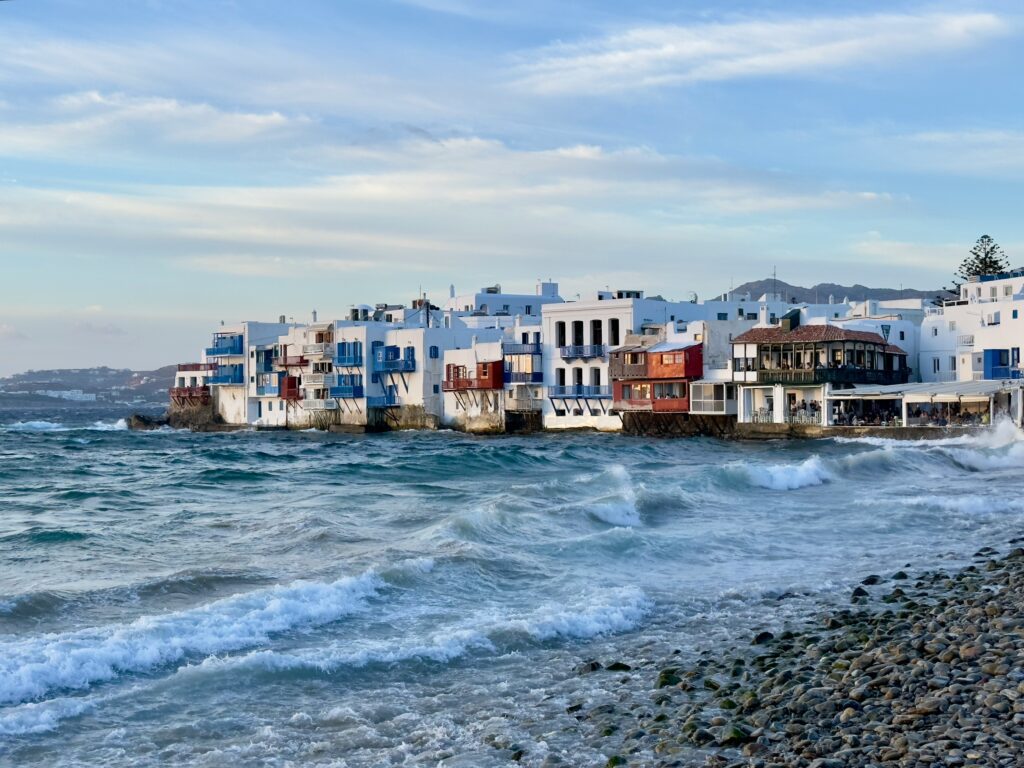
Mykonos has the most developed party scene in Greece — beach clubs like Paradise and Super Paradise run through the afternoon and into the night, the town’s bar scene is dense and international, and the island generally attracts a crowd that comes specifically to spend money and stay up late. It’s genuinely fun if that’s what you’re after, but it’s expensive, crowded in peak season, and not a place to go expecting a quiet evening.
Ios is the budget-friendlier alternative, positioned between Naxos and Santorini on the Cyclades ferry route. It has a reputation as a younger party island, but it also has genuinely beautiful beaches (Mylopotas is one of the best sandy beaches in the Cyclades) and a charming hilltop Chora that feels authentically Greek. It’s easier to enjoy quietly outside of peak season than Mykonos is.
Best Greek Island for History: Rhodes or Crete
Rhodes has one of the best-preserved medieval old towns in Europe. The Street of the Knights, the Palace of the Grand Master, and the walled city itself are extraordinary — and unlike many historic sites in Greece, the old town is also a living neighborhood full of restaurants, cafes, and shops. The Acropolis of Lindos, perched on a cliff in the south of the island, is another highlight. Read our detailed Rhodes Old Town guide before you go.
Crete goes deeper in terms of age — the Minoan civilization that built the Palace of Knossos predates classical Greece by thousands of years. The island’s historical layers go from Minoan through Venetian to Ottoman, and the Archaeological Museum in Heraklion is one of the best in the Mediterranean.
Karpathos is a lesser-known option that rewards travelers interested in traditional Greek island culture. Villages like Olympos in the north have preserved customs, dress, and architecture that have largely disappeared elsewhere. Our post on whether Karpathos is worth visiting covers what makes it different.
Best Greek Island for Avoiding Crowds: Paros or Milos
Santorini and Mykonos are genuinely wonderful islands that have also become victims of their own success. If you want the Cycladic experience — whitewashed architecture, beautiful water, good food and wine — without fighting through cruise ship passengers on a narrow path, Paros and Milos are the two best alternatives.
Paros has been named the best island in the world by Travel + Leisure, and it earns the distinction. It has beautiful beaches, a charming capital (Parikia), the lively harbor town of Naoussa, easy ferry connections to the rest of the Cyclades, and a more relaxed pace than its famous neighbors. It’s not undiscovered — it’s popular — but it’s not overwhelmed.
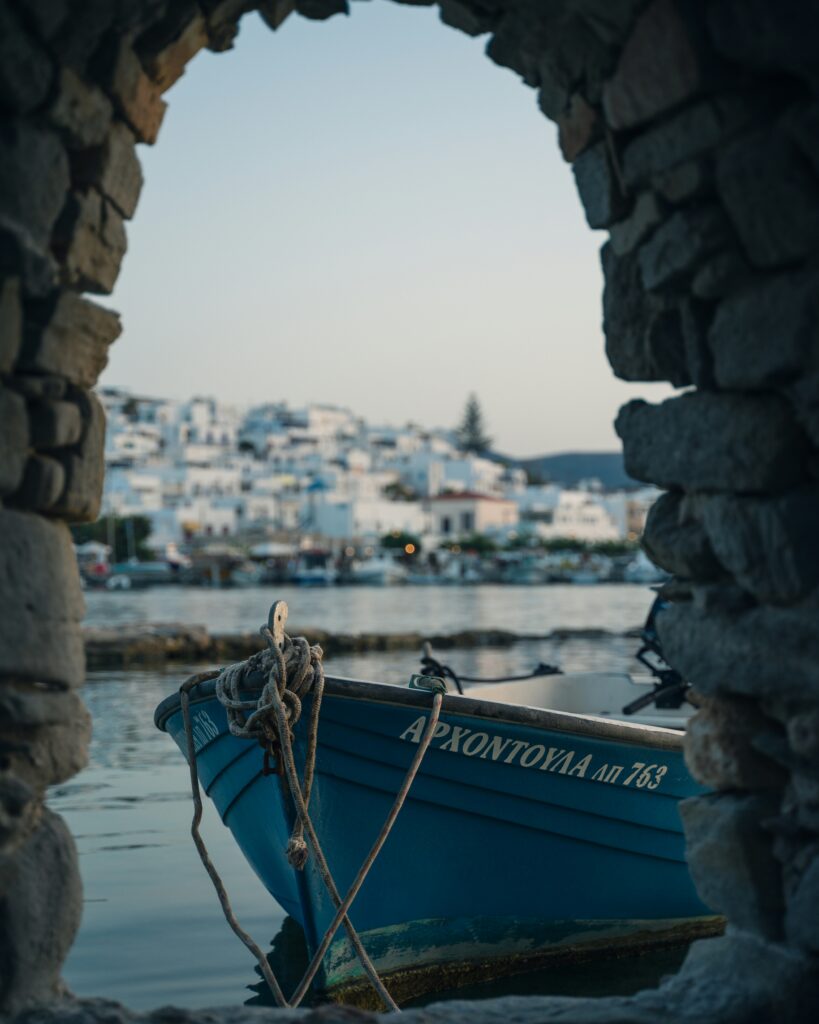
Milos is slightly more remote and harder to get to, which naturally keeps numbers lower. The reward is beaches and landscapes that feel genuinely spectacular rather than merely beautiful.
A Note on Island Hopping
If you want to visit multiple islands, the most important thing to know is that you should stick to one island group per trip. Combining Corfu (Ionian) with Santorini (Cyclades) requires a flight via Athens and adds significant cost and travel time. Within the Cyclades, ferries connect most islands daily in summer — Santorini, Mykonos, Paros, Naxos, and Ios are all on the main route and easy to combine in a week.
The Ionian Islands (Corfu, Kefalonia, Zakynthos, Lefkada) are linked by shorter ferry hops and make a natural island-hopping circuit for travelers based in western Greece.
Practical Tips Before You Book
- Book accommodation early for July and August. The popular islands — Santorini, Mykonos, Corfu, Skiathos — fill up months in advance in peak season. Shoulder season (May, June, September) offers better availability and noticeably lower prices
- Budget for ferries. High-speed ferries between islands are significantly more expensive than the slower conventional ones — factor this into your budget
- Travel insurance is worth it in Greece. Ferry cancellations due to strong winds (particularly the Meltemi winds in August in the Cyclades) are common and can disrupt itineraries quickly. Having coverage that includes trip interruption saves headaches
- Not all islands have airports. If you’re short on time, check whether your island has direct flights from your departure city or requires a connection through Athens
The Short Version
- First-timers: Crete or Corfu
- Couples: Santorini (off-peak) or Corfu’s northeast coast
- Beaches: Milos or Zakynthos
- Families: Naxos or Kos
- Nightlife: Mykonos or Ios
- History: Rhodes or Crete
- Avoiding crowds: Paros or Milos
Wherever you end up, the Greek islands tend to exceed expectations. The harder question is usually not whether you’ll have a good time — it’s how to stop yourself from booking the next trip before the current one is over.