

Best Time to Visit the Greek Islands: A Month-by-Month Guide
The best time to visit the Greek islands depends almost entirely on what you’re trying to avoid. Avoid the heat? Go in May or September. Avoid the crowds? Same answer, plus most of October. Want guaranteed beach weather and don’t mind fighting for a sunlounger? July and August are right there waiting for you.
The honest version is that Greece doesn’t really have a bad time to visit — it has trade-offs. This guide breaks down what each season actually looks like so you can decide which trade-offs you’re willing to make.
Why Timing Matters More in Greece Than Most Destinations
The Greek islands aren’t like a city destination where most things stay open year-round. A significant chunk of hotels, restaurants, beach clubs, and ferry routes simply shut down between November and March. On smaller islands like Folegandros or Mykonos, the tourist infrastructure essentially disappears in winter. Even on larger islands like Corfu and Rhodes, off-season travel means limited choices and reduced ferry schedules.
On the flip side, the islands in peak summer — particularly July and August — can feel overwhelmed in a way that surprises first-time visitors. Santorini’s famous sunset path in Oia is genuinely shoulder-to-shoulder in August. Ferry tickets sell out. Hotel prices double. That kind of travel just isn’t for me.
Knowing this going in means you can plan around it rather than discover it mid-trip.
Best Time to Visit the Greek Islands for Most Travelers: May and September
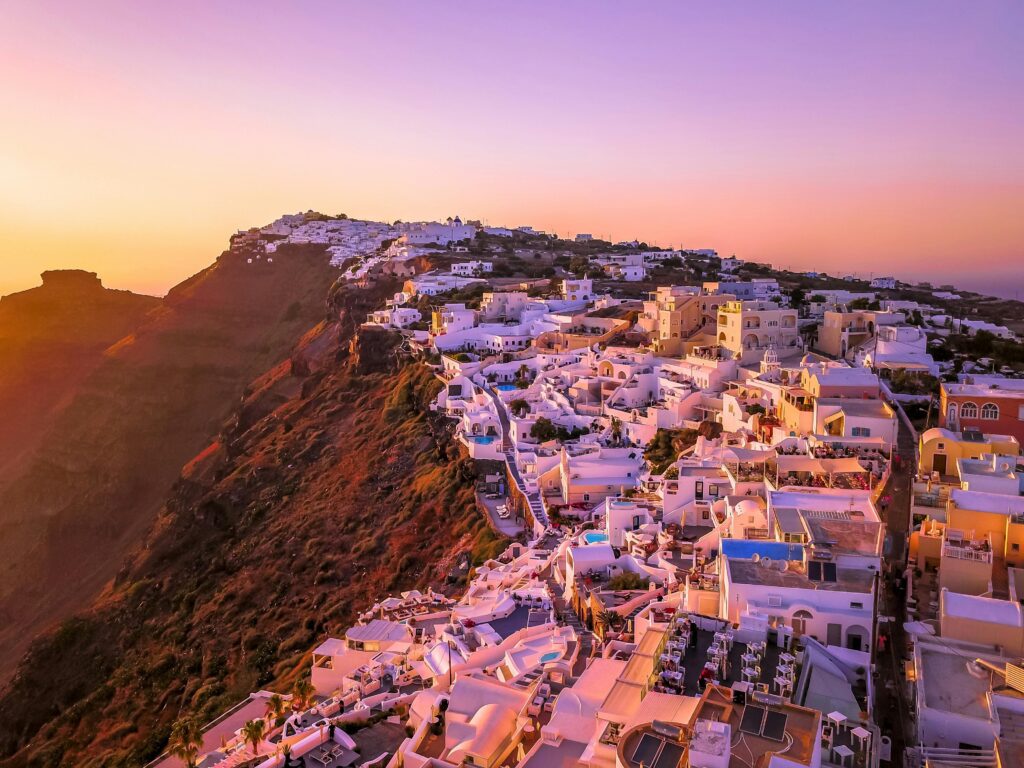
If you could only pick two months, May and September are the answer most experienced Greece travelers land on — and for good reason.
May has everything you want: temperatures in the low-to-mid 20s Celsius (low 70s°F), minimal crowds, lower hotel prices, and most of the tourist infrastructure fully open for the season. The islands are still green before the summer sun dries everything out. The sea is cool but swimmable from late May onward, particularly in the southern Aegean around Crete and the Dodecanese. Ferries are running regularly. You can get a table at a good restaurant without a reservation. It’s the sweet spot.
September is the other side of the same coin. The crowds thin noticeably after the first week, prices drop, and the sea is at its warmest — it’s been absorbing heat all summer. Temperatures are still solidly summer-like in the first half of the month, easing into something more comfortable by the end. September is arguably the best month for swimming in the entire Greek islands calendar.
The Greek National Tourism Organisation has a useful events calendar if you’re timing your trip around local festivals.
One practical note for May: Greek Orthodox Easter falls in April or early May and is the biggest holiday of the year. Ferries don’t run, most businesses close for the long weekend, and domestic travel spikes. Check the dates before you book and either plan around it or lean into it — the Easter celebrations in Corfu in particular are worth seeing.
Peak Season (July and August): When Greece Is at Its Most Intense
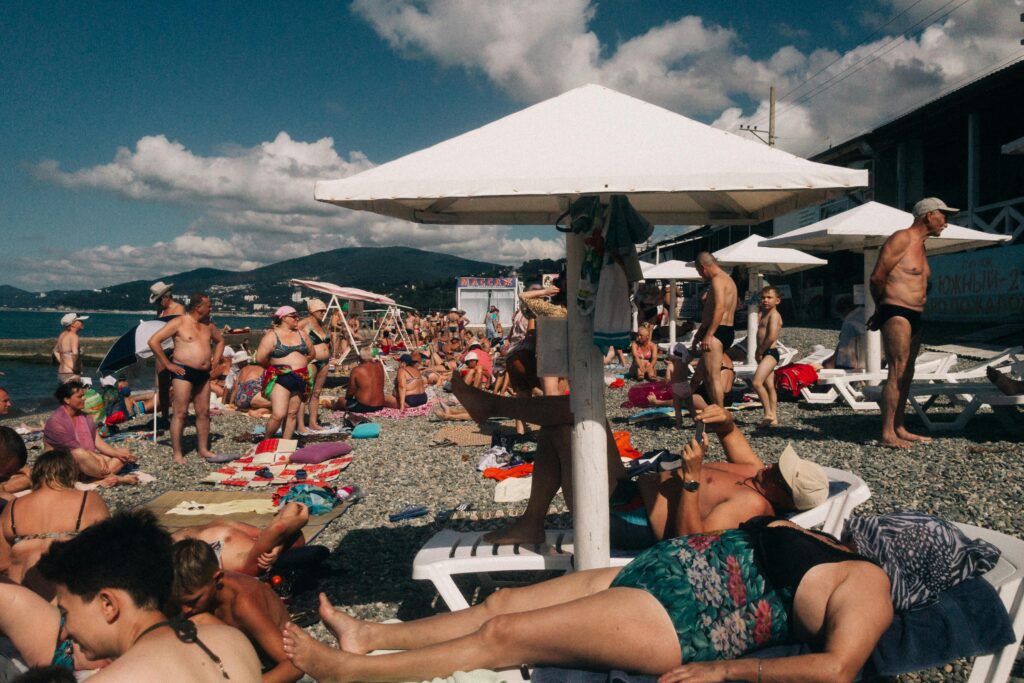
July and August are when the Greek islands are most fully alive and most fully overwhelmed, often at the same time.
The upside: everything is open, ferries run constantly, the weather is guaranteed, and the energy on islands like Mykonos and Santorini is genuinely electric if that’s what you’re after. Beach clubs are at full swing. The nightlife is real. The sunsets are spectacular. Greece in high summer is a proper experience.
The downside is real too. Temperatures regularly hit 35°C (95°F) and above, particularly in the Cyclades. The Meltemi winds — strong, dry winds that blow across the Aegean in July and August — can disrupt ferry schedules, make some beaches unpleasant, and catch first-timers completely off guard. Prices for flights, hotels, and ferries are at their highest. Popular viewpoints and archaeological sites get genuinely packed.
If you’re visiting in July and August, a few things help. Book accommodation and ferries well in advance — months ahead for the most popular islands. Choose islands that handle crowds better: Naxos and Paros feel less overwhelmed than Santorini or Mykonos even at peak season. And adjust your schedule to the Greek rhythm — beaches are quieter in the early morning, and evenings after 9pm are when the island actually comes alive.
Shoulder Season (June and October): The Hidden Sweet Spots
June and October don’t get enough credit.
June has most of the benefits of July with fewer of the downsides. The sea is warm enough to swim properly, the days are long, everything is open, and the crowds haven’t yet reached their August intensity. Prices are lower than peak season. If your travel dates are flexible and you’re choosing between June and August, June is almost always the better call for an enjoyable trip.
October is genuinely underrated. Early October is still warm — mid-20s Celsius — and the sea retains its summer warmth well into the month. The islands feel like themselves again after the tourist rush. Local restaurants fill up with Greeks rather than tour groups. Prices drop significantly. The light in October has a quality that photographers and anyone who pays attention to such things will notice immediately.
The caveat with October: ferry schedules start thinning toward the end of the month, and some smaller islands begin winding down. If you’re island hopping in October, check routes carefully before you commit.
Spring (April): Good for Culture, Patchy for Beaches
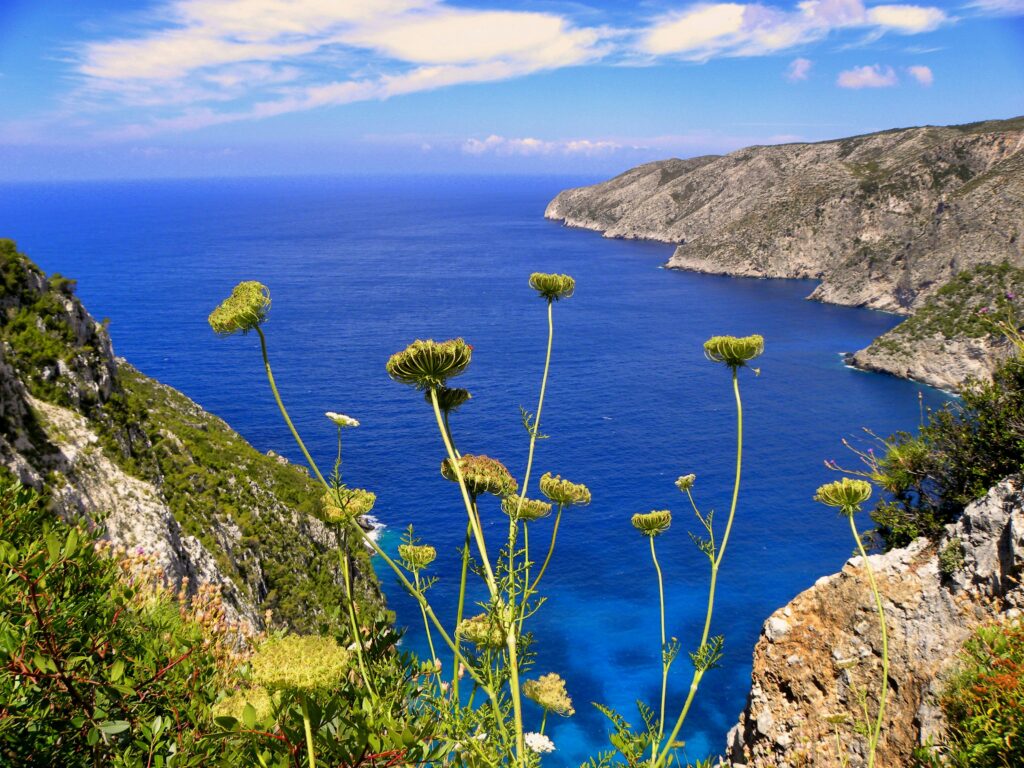
April is a good month to visit Greece if your priority is ancient sites, walking, and village life rather than beach days. The landscape is at its most green and lush — Santorini and Mykonos, which turn quite brown and dry by August, are genuinely beautiful in spring. Crowds are light. Prices are low.
The sea is cold in April — most travelers won’t be swimming, and those who do are hardier than average. Some seasonal businesses on smaller islands haven’t opened yet. But for cultural trips, hiking, or any itinerary centered on history rather than beaches, April works well.
Winter (November to March): For Cities, Not Islands
Winter in Greece is essentially a different trip from summer in Greece. Most of the Greek islands go into hibernation — hotels close, ferries run on skeleton schedules, and the tourist infrastructure disappears almost entirely on smaller islands.
What does work in winter is Athens and Thessaloniki — both are genuinely enjoyable in cooler weather, with world-class museums, excellent food, and archaeological sites you can actually explore without a crowd. Rhodes and Crete retain some tourist infrastructure year-round due to their size and year-round populations, and Crete in particular has enough going on culturally and gastronomically to be worth visiting even in January.
For up-to-date ferry schedules between islands, Ferryhopper is the most reliable planning tool — it covers all routes and lets you book directly.
If an island is specifically on your itinerary, winter travel requires research and flexibility — ferry cancellations due to winter weather are common, and your accommodation choices will be limited.
Best Time to Visit Specific Greek Islands
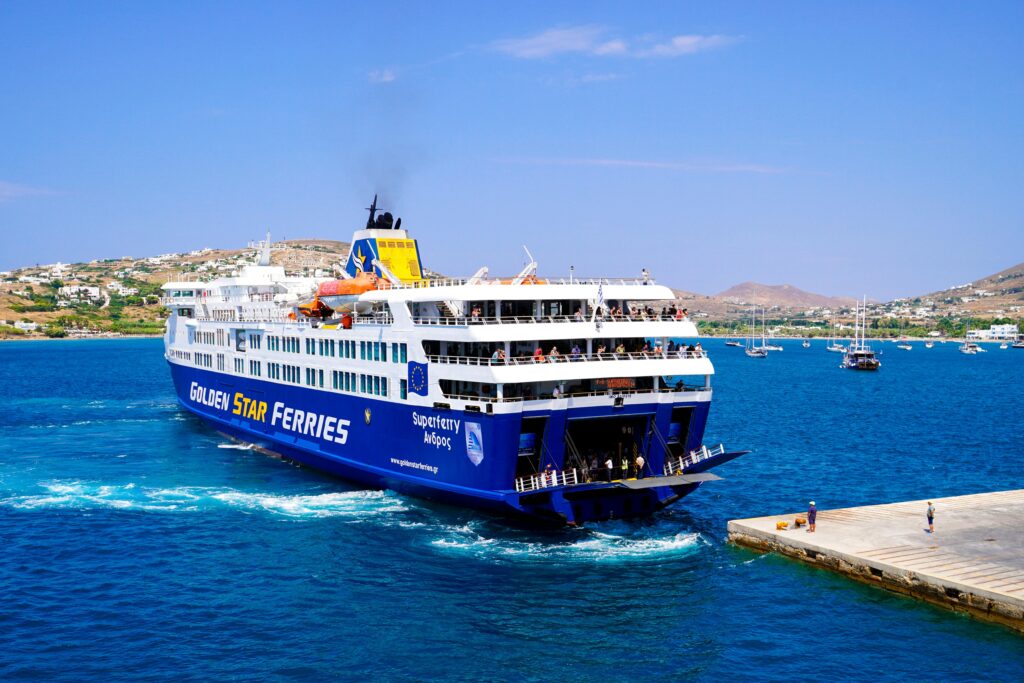
Timing varies slightly by island group:
Cyclades (Santorini, Mykonos, Paros, Naxos): May, June, and September are the sweet spots. July and August are intense but fully operational. These islands are largely shut in winter.
Ionian Islands (Corfu, Kefalonia, Zakynthos): The Ionians get more rainfall than the Aegean islands and stay green longer. April and May are beautiful here. Corfu in particular is worth visiting slightly earlier in spring than the Cyclades. See our full where to stay in Corfu guide for more on planning your Corfu trip.
Dodecanese (Rhodes, Kos, Karpathos): This is the warmest island group and stays swimmable into late October. April is viable here when it’s still cool in the Cyclades. Rhodes in particular works well from April through November. Our Rhodes Old Town guide covers what to see whenever you go.
Sporades (Skiathos): Peak season is June through August. Skiathos is a summer island through and through — go for the beaches, go when they’re at their best. See our Skiathos guide for what to expect.
Crete: The most versatile island for timing. Genuinely worth visiting from April through November, and even in winter Crete has enough cultural and culinary depth to make it worthwhile.
Quick Reference: Best Time to Visit the Greek Islands by Priority
- Best weather + fewest crowds: May or September
- Best for beaches and swimming: July, August, or September
- Best value for money: April, October, or early November
- Best for culture and history: April, May, or October
- Best for island hopping: June or September (reliable ferries, manageable crowds)
- Avoid if you hate heat and crowds: July and August on Santorini or Mykonos
For help choosing which island to visit once you’ve picked your timing, our guide to the best Greek islands matches every traveler type to the right destination. And if it’s your first trip, our best Greek island for first-timers guide breaks down the five best starting points.